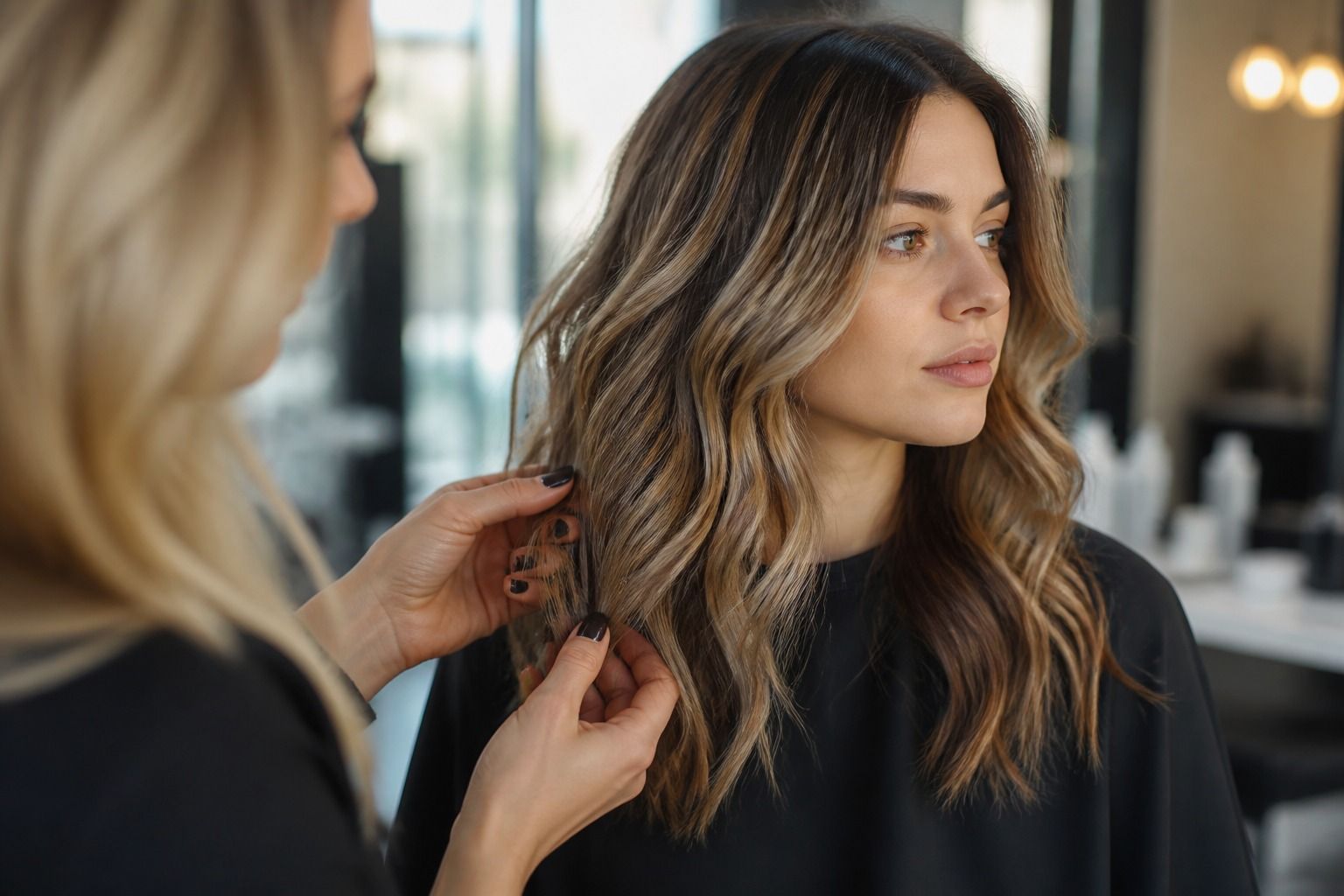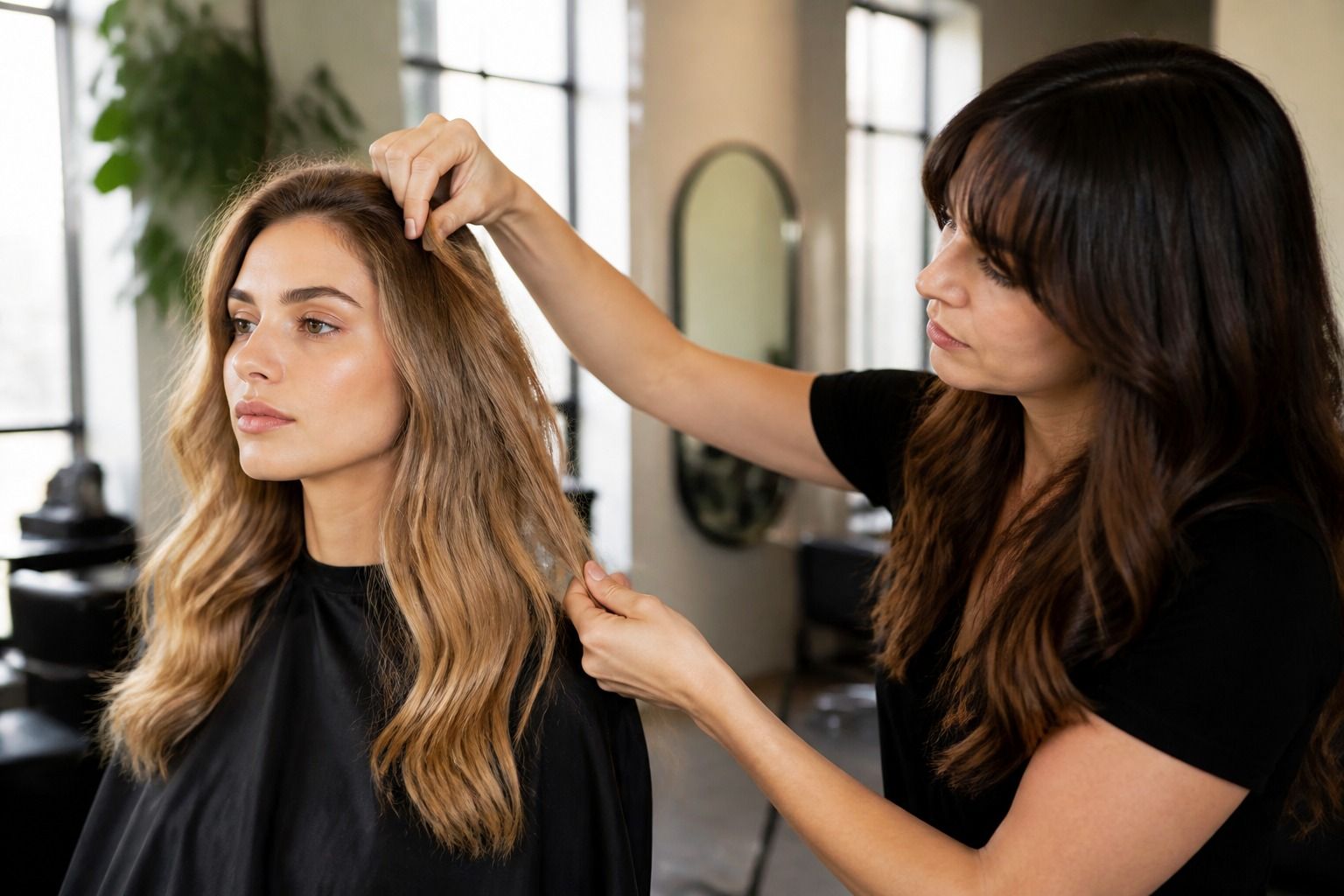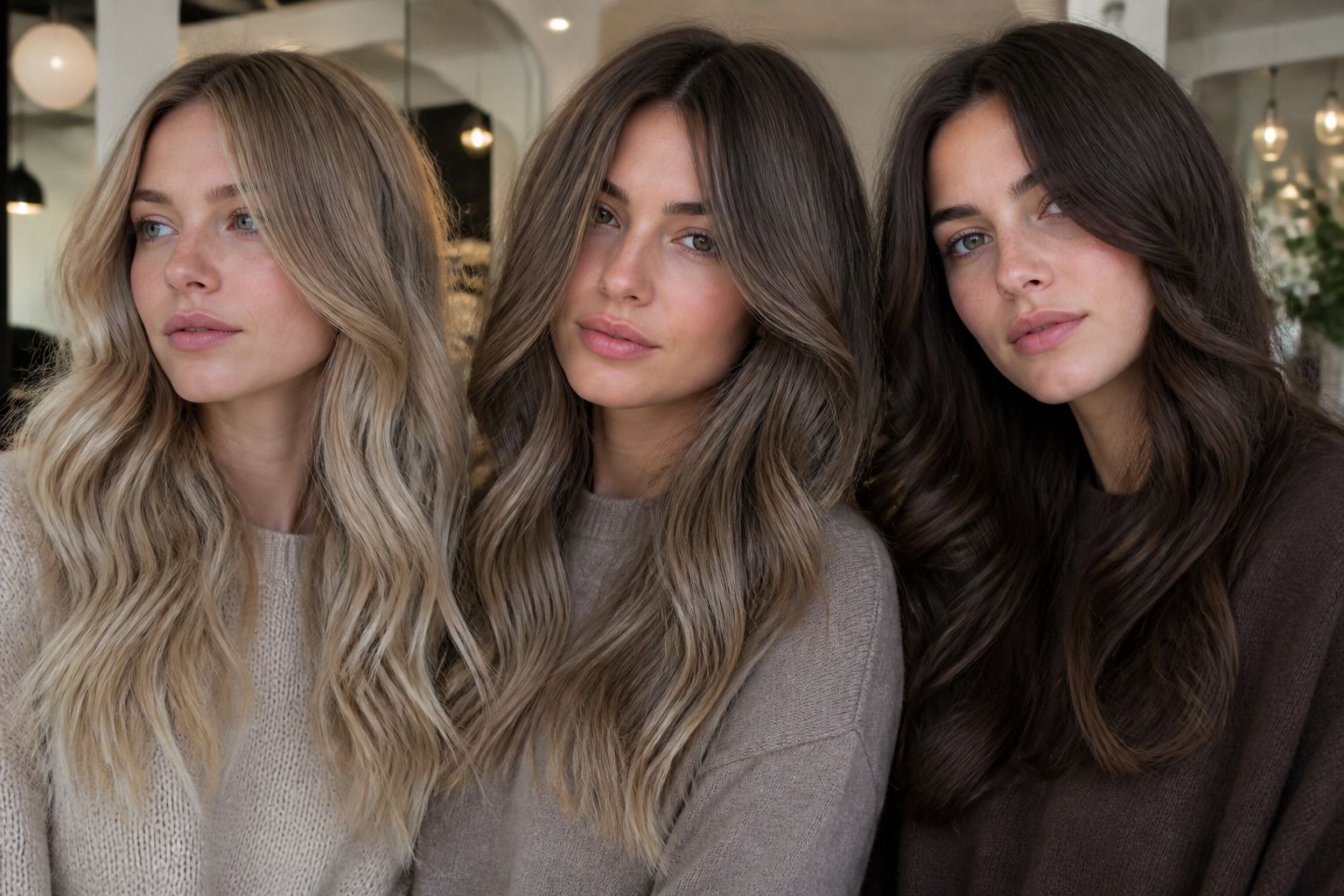
Soft Summer hair colors often sit in the space people describe badly at the salon: cooler than honey, gentler than grey, lighter than a deep brunette but not necessarily blonde. Beige, ash and muted brown can all land there, yet they do different work around the face. The useful comparison is not which label sounds most flattering. It is how each direction behaves on your starting shade, your porosity, your texture and the amount of maintenance you will tolerate.
The practical difference between beige and ash
Beige has a balanced, slightly creamy reflection. It can carry a little warmth without looking golden, which makes it helpful when a fully cool shade would leave the face flat. Beige blonde often works as a bridge between a warm existing base and a softer seasonal palette. The finish can still look calm, but the hair keeps enough light to show movement.
Ash leans cooler and usually reduces the visible orange, red or yellow in a starting shade. Ash brown may look clean and smoky on medium brown hair, while ash beige can make a light base look more subdued. It becomes difficult when “cool” is treated as “as grey as possible.” Too much grey can swallow reflection, especially on porous ends or fine hair.
Muted brown sits between the two when you want depth without a strong temperature statement. A neutral brown can keep the face anchored and let the haircut provide the brightness. It is often the sensible choice for someone who likes beige blonde references but starts with medium or dark brown hair and does not want a long lightening process. The result may feel more expensive because it follows the hair’s natural depth.
Lighting changes the argument. Warm indoor bulbs make beige appear more golden and can hide the difference between neutral brown and warm brown. Cool bathroom light can make ash look severe. Compare swatches and reference photos beside your face in window light, then look again in the kind of room where you normally get ready. The shade must survive more than one lamp.
| Direction | How it usually reads | Common risk | Good salon question |
|---|---|---|---|
| Warm beige | Soft light with a creamy, gentle reflection | It turns yellow or copper on a warm base | How much warmth should remain after the first wash? |
| Cool ash | Smoky, grey-beige or cooler brown reflection | It looks flat, dark or too grey on the ends | Where should the cooler tone be placed and softened? |
| Neutral brown | Muted depth with light coming from shine and movement | It becomes heavy if the face area has no brightness | Would a few lighter pieces keep the result open? |
When muted brown is easier than going lighter
A lighter color is not automatically a softer color. If your natural root is medium brown, a muted brunette can lower contrast around the face while keeping the hair believable. The same impression may require a great deal of lightening if you chase a pale beige blonde. That work also creates a larger gap between the new shade and the root, which can make regrowth more noticeable.
Muted brown makes sense when the hair has old permanent dye, uneven lengths or a texture that loses shine when lightened. It can give the eye a calmer field of color while leaving enough depth for brows and facial contrast. A translucent finish, slightly brighter ends or a few pieces around the cheekbones can keep the result from reading as a single dark sheet.
Starting shade still sets the limit. On natural dark brown, a beige-brown direction may be more realistic than a pale beige. On faded blonde, adding depth can make the hair look healthier and make the next grow-out less abrupt. On red or copper lengths, neutral brown may need careful placement so the warmth does not show in a stripe. The right question is which version can be reached evenly from the hair you have.
Hair density changes the balance. Dense hair may support a deeper muted brown without looking flat because the surface catches many small reflections. Fine hair can look darker than expected when the same tone is placed all over. A few lighter pieces, a lighter perimeter or a softer root can restore air around the face. They are design choices, not evidence that the base shade failed.
| Starting point | More manageable direction to discuss | Why it may work |
|---|---|---|
| Medium brown with orange or red reflection | Neutral or cool muted brown with controlled brightness | It changes the temperature without demanding a pale result |
| Dark blonde with faded highlights | Beige-ash blonde or soft mushroom brown | It can blend the old light pieces into a quieter field |
| Light blonde with dry porous ends | Muted beige or a deeper neutral root with softer lengths | It avoids making the ends absorb a heavy ash tone |
| Dark dyed lengths and a natural root | A smaller tonal change or gradual face framing | It respects the difference between the root and the colored hair |
How porosity changes the tone after coloring
Porosity is one reason a color can look balanced near the scalp and unexpectedly dark or cool at the ends. More porous hair has a rougher, more open surface after wear or previous color, so it may take a toner quickly and release the reflection unevenly later. The effect is especially visible when the target sits close to grey, mauve or smoky beige.
Look at your own pattern rather than relying on a general promise. Do the ends grab ash first? Do they fade warmer after several washes? Does the front section look brighter because it has received more sun or styling? Those observations help a stylist decide whether the same tone should cover the whole head or whether the ends need a lighter touch and a shorter processing time. Exact formulas make little sense without that starting information.
Texture affects porosity too, though it does not tell the whole story. Curly or wavy hair may have different levels of dryness along the same strand, while straight hair can show a band where one section has taken more color. A gloss or toner may look smooth in the chair and then separate into warmer roots and cooler ends once the hair is washed and worn naturally. Ask to judge the result in your usual texture.
Maintenance should account for the first fade, not only the first day. Beige may lose its balance and reveal yellow warmth. Ash may soften into neutral brown or leave a dull cast on the most porous pieces. Rose or mauve reflections often fade from the ends sooner. The answer is not to demand that the shade never change. It is to choose a starting tone that still looks acceptable when the strongest reflection has eased.
How to keep the face area from looking dull
Place the face-framing pieces with care. A narrow, softly blended section near the cheekbones can bring light back to the face without turning a muted brunette into a high-contrast highlight look. If the pieces are too pale or too wide, they become the first thing you see and can make a Soft Summer palette feel sharper than intended. The right width depends on your haircut, parting and natural contrast.
For a beige direction, keep the front light enough to reflect but not so warm that it competes with the skin. For ash, leave some beige or neutral reflection near the face if a solid grey finish makes your features look tired. For muted brown, a slightly lighter front or a few fine ribbons may be enough. The aim is a change in light, not a separate stripe of color.
Brows are part of the comparison. Dark brows can hold a lighter beige shade in place, while pale or softly colored brows may need a deeper root to stop the hair from taking over the face. This does not mean matching brows to the hair exactly. It means noticing whether the difference between brow and root creates a deliberate frame or an accidental one.
Check the result in motion. Straight hair can show a front piece as a clean block, while waves distribute it through bends. A short cut may put the brightest section beside the eye and cheek, so a small change has a large effect. A longer layered cut can carry a stronger face frame because the length breaks the edge. Photos from the front and three-quarter angle are more useful than a single back view.
A simple comparison for the salon chair
Take three reference images with similar lighting and ask the salon to compare the direction, not copy the model. Point to the temperature, depth and placement you like in each one. One image may have the right beige reflection but a much lighter starting shade. Another may show the correct root shadow but a different haircut. Separating those details makes the request more honest.
| If you want | Start by saying | Do not leave unspoken |
|---|---|---|
| A soft light result | I want beige with a muted finish, not a bright golden blonde | Whether the ends can handle more light and how the root should blend |
| A cooler brunette | I want ash or smoky reflection, but I still need shine and movement | Where grey could collect and how the face area will stay open |
| A middle ground | I want neutral brown with a quiet beige or ash direction | How much depth you are willing to keep as the hair grows |
| A subtle change | I would rather change the reflection or front pieces than recolor everything | Which sections will be treated and how the old color will blend |
Bring up the maintenance interval before the color is chosen. If you can return often, a brighter face frame or a more specific cool finish may be comfortable. If appointments are occasional, keep the root close to its natural depth and let the lengths do less dramatic work. Your normal washing, styling and time outdoors also affect how quickly the difference becomes visible.
Ask what happens when the shade fades. A good comparison includes the second version of the color, not only the fresh salon result. Beige should be allowed to become a little warmer without turning brassy. Ash should soften without leaving the ends lifeless. Muted brown should keep enough light that it does not become a dark block. These are practical limits, not signs that the colorist missed the target.
The strongest choice among Soft Summer hair colors is often the one that sits between two labels. A beige-ash blend may give a cooler impression without the flatness of strong ash. A neutral muted brown may create the same low-contrast effect as a much lighter blonde with less disruption to the root. Start with your hair’s depth and condition, use lighting to judge the reflection, and let the salon plan decide how much change your hair can carry.