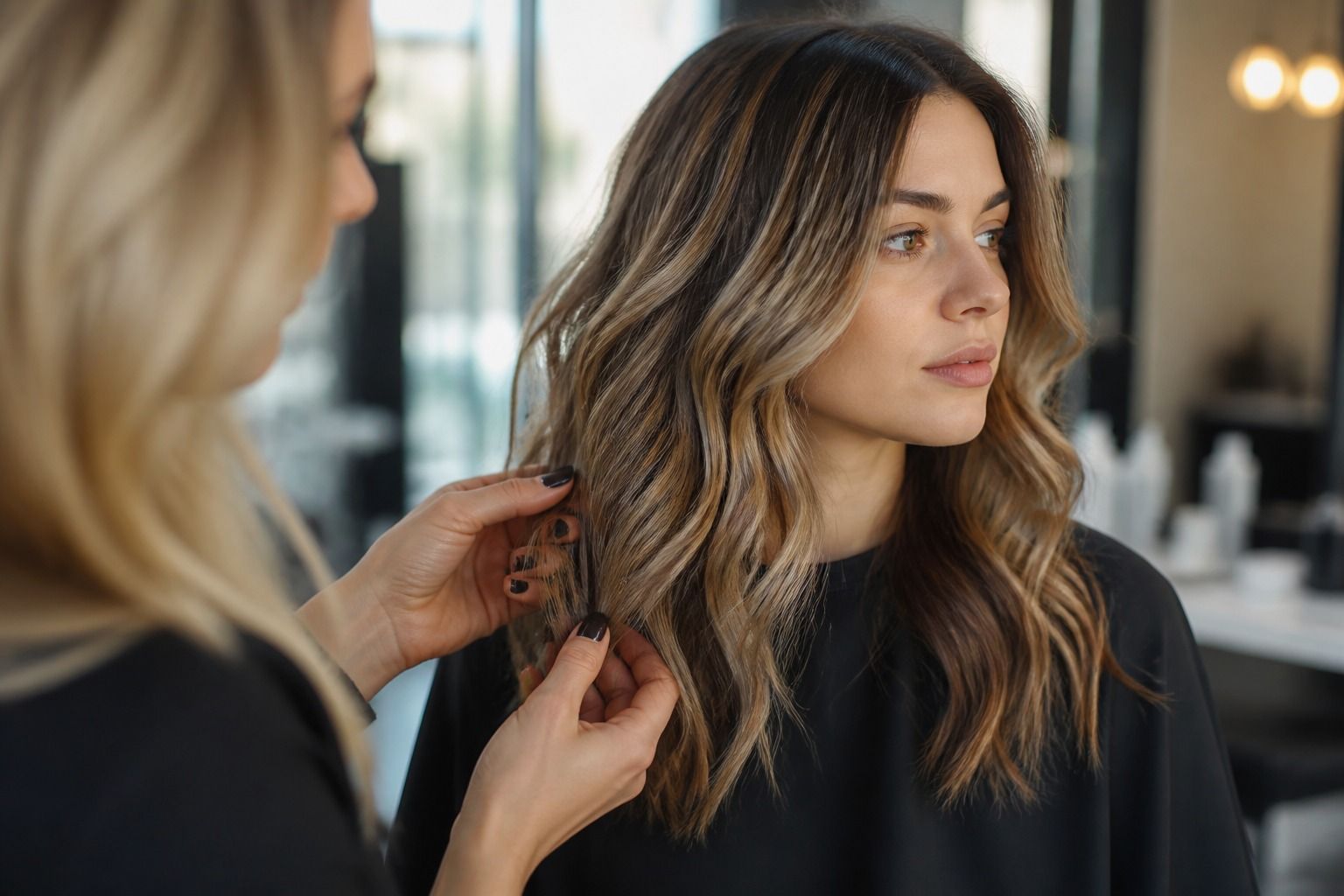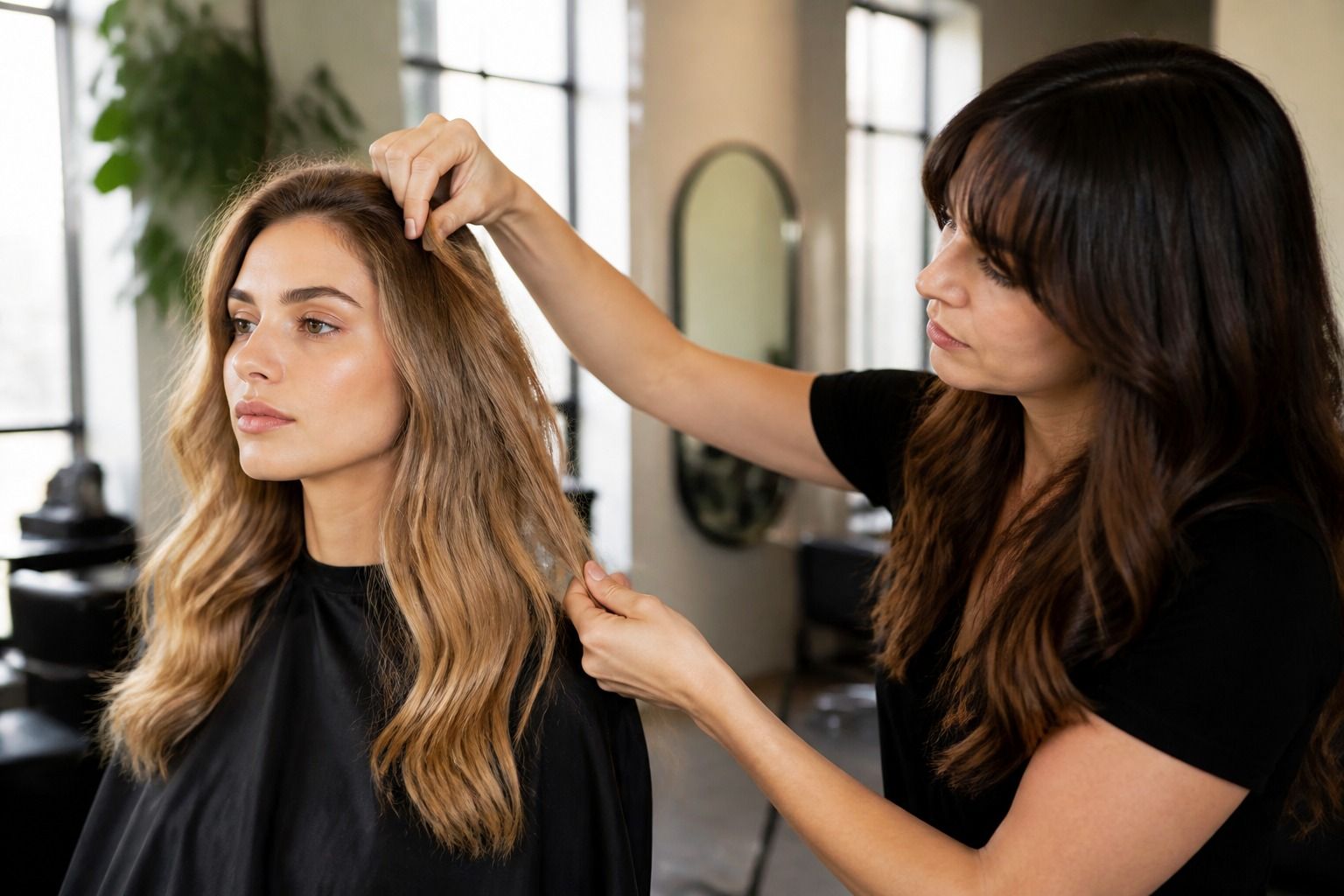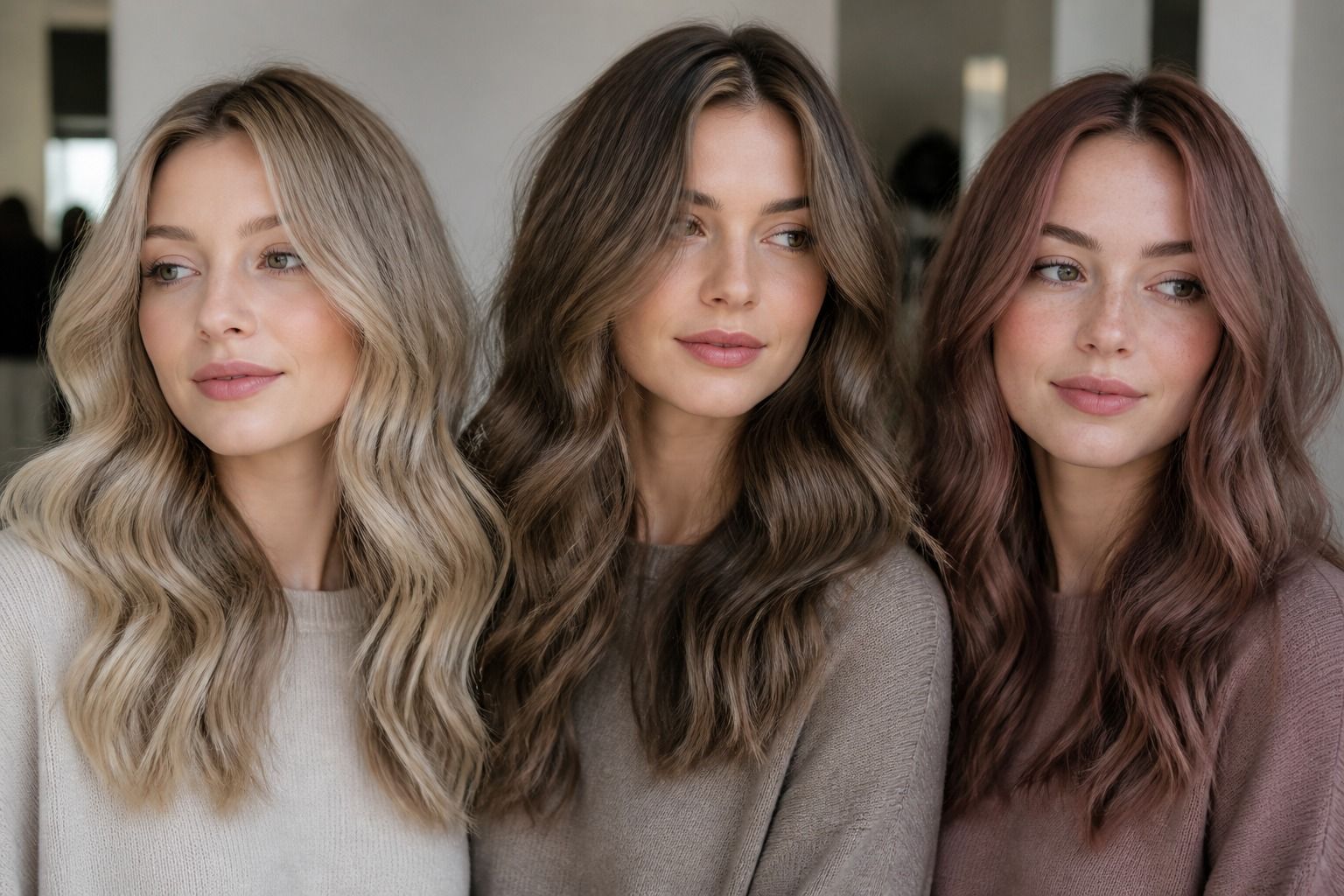
Soft Summer hair color works best when the shade has enough quietness to sit beside the face, but enough shape to look like a choice. That usually means moderate depth, softened contrast and a reflection that does not shout warm or icy. The familiar ideas, mushroom brown, dusty blonde, ash beige and rose brown, are starting points rather than fixed answers. Your natural root, hair texture, old color and tolerance for upkeep decide which version will feel easy to wear.
What makes a Soft Summer shade look soft
Softness is mainly about chroma and contrast, not about making the hair as pale or as grey as possible. A muted shade has color, but the reflection is gently blended. A medium brown with a smoky beige cast can look softer than a much lighter blonde with a sharp yellow tone. The same applies to rose brown: a dusty rose reflection can sit quietly, while a bright pink or copper tone changes the whole balance of the face.
Depth matters because a shade that is too light can erase the natural structure around the eyes and brows. Someone with a medium ash-brown root may look more balanced in a muted dark blonde or light brown than in an almost-white blonde. Someone who starts with light blonde hair may need a little beige or shadow at the root so the lengths do not look disconnected. Soft Summer does not mean one level of lightness.
Contrast should be read in the whole face. Look at the difference between your brows, eyes, skin and natural hair. If those features blend gently, a solid inky root with pale lengths may feel abrupt. If your brows and eyes are clearer, an all-over beige shade may need a slightly deeper root or a few lowlights to keep the face from disappearing. The most convincing result usually has small changes in depth rather than one perfectly flat tone.
Lighting can make a muted color seem either polished or dull. Window light reveals whether the shade has a gentle beige, grey, brown or rose reflection. Warm indoor light can make mushroom brown look richer and ash beige look more golden. Check reference photos in daylight and look at the shadow areas as well as the brightest pieces. If the color only works in a bright filtered image, it probably needs a more realistic version.
| Quality to compare | Soft result | What can push it too far |
|---|---|---|
| Chroma | Dusty, blended reflection with some visible color | Bright copper, vivid pink or icy white |
| Depth | Close enough to the root to keep the face anchored | A dramatic jump that makes the root look separate |
| Contrast | Fine ribbons, a gentle root shadow or blended ends | Wide bright panels beside a very quiet base |
| Finish | Soft shine that lets the tone move through the hair | Flat grey that removes all warmth and light |
How to choose between blonde, brown and rose-leaning options
Dusty blonde suits a starting shade that is already light enough to carry a muted finish without a large jump in depth. It can be a good direction for naturally dark blonde hair, faded highlights or a lighter base with visible beige underneath. Ask whether the desired result should look creamy, smoky or neutral. Those words may overlap in a photo, but they create different expectations once the hair moves under daylight.
Mushroom brown is often the steadier choice for medium brown or dark blonde hair. It keeps some depth around the face and can soften unwanted orange or red reflection without turning the hair into a charcoal block. The best version still has movement through the lengths. Fine highlights, a lighter front piece or a slightly brighter gloss can stop the shade from looking heavy on a blunt cut.
Rose brown needs restraint because the rose part can become the loudest thing in the room. On a neutral or cool brown base, a faint mauve or dusty berry reflection may read as soft and expensive in daylight. On a very warm base, it may turn reddish or disappear into the existing warmth. Bring a reference that shows the level of pink you mean, then describe whether you want the reflection visible only in bright light or present indoors as well.
Your natural depth can make two people’s versions of the same Soft Summer hair color look unrelated. A light-haired person may need a darker root to keep dusty blonde from becoming blank. A brunette may get the same calm effect from a translucent brown gloss, with no need to chase a pale result. The choice should follow the smallest change that gives you the impression you want.
| Direction | Usually suits this starting conversation | Watch for |
|---|---|---|
| Dusty blonde | Light to medium blonde, faded highlights or a base already near the target depth | Yellow warmth, over-lightened ends and a root that looks too hard |
| Mushroom brown | Dark blonde to medium brown hair that needs less red or orange reflection | Grey flatness, excess darkness and a heavy one-tone finish |
| Rose brown | Neutral brown or beige bases where a soft reflected tint is enough | Bright red warmth, uneven porosity and a tint that fades first at the ends |
Why too much ash can look flat
Ash is useful when the hair has more warmth than you want, but it is not the same as softness. A strongly grey finish can remove the light that gives fine hair shape. On a face with low contrast, very cool and matte hair may make the skin look tired even when the season label seems to support it. A small amount of beige or neutral reflection can leave the overall direction cool without draining the face.
Starting level changes the effect. Ash tones placed over pale, porous ends may grab quickly and look darker or duller there than at the root. The same family on a dense, healthy medium brown can look glossy and restrained. This is why a color that seems perfect in a swatch may need a more neutral version on the lengths and a different balance near the scalp. A stylist should see the sections separately.
Hair texture affects the reading as well. Straight hair shows a continuous reflective sheet, so a flat ash finish is easy to notice. Waves and curls break the tone into smaller flashes, but dry or rough ends can swallow shine and make the same color appear dusty. If you wear your hair textured, judge the shade in that shape. If you alternate between smooth and air-dried styles, choose a finish that can handle both.
Brightness is the missing piece in many cool references. The aim is not maximum coolness; it is a quiet temperature with enough light to keep the hair alive. A beige-ash blend, a muted brown with brighter front pieces or a soft gloss over a neutral base can do more for the face than adding another layer of grey. If the reference looks beautiful only because the hair is strongly lit, lower the expectation before the appointment.
How a root shadow changes the result
A root shadow gives a lighter or brighter length somewhere to begin. On dusty blonde hair, a soft shadow can make the face look less exposed and reduce the shock of regrowth. On mushroom brown, a slightly deeper root can add structure to fine hair and help a pale front piece look deliberate. The shadow should connect with the natural base rather than create a dark stripe that takes over the haircut.
Consider where your own hair grows first. A visible parting, short fringe or fine hairline shows the root quickly. A deep shadow may therefore create more maintenance than a close-to-natural root, even if it looks good in the first week. If you usually wear a side part or pull your hair back, check the crown and temples in the reference photo. Those areas often reveal whether the blend is truly soft.
Length and texture change the scale of the shadow. Long straight hair can show a clean transition for many inches, while curls distribute the change through bends and highlights. A blunt bob may need a lighter face frame to keep a darker root from making the perimeter look dense. Layers can make the same palette feel more blended because the light catches different pieces as the hair moves.
Keep the maintenance promise honest. A root shadow does not remove regrowth; it changes how noticeable the boundary is. The closer it sits to your natural root, the easier the transition usually feels. If the salon plan includes a stronger lightening step, ask how the first few inches will be refreshed and whether the lengths need a separate tonal service. Those details matter more than the label Soft Summer.
Which change is easiest to maintain
The easiest Soft Summer direction is usually the one that stays close to your natural depth and changes the reflection or placement. A brunette may find a neutral mushroom gloss easier than repeated lightening. A dark blonde may prefer fine ash-beige ribbons with a soft root instead of an all-over pale blonde. Someone already blonde may only need a quieter toner and a trim that removes the ends that hold color unevenly.
Fading rarely happens evenly. Porous ends can release a cool or rose reflection sooner than the denser hair near the root. Warmth may become more visible after the surface tone softens. A shade that looked perfectly muted in the chair can therefore move toward beige, honey, grey or pink depending on the starting hair and how often it is washed. Build the plan around the version you can refresh, not the most flattering first-day photograph.
Maintenance also includes the shape of the haircut. Blunt ends display a color band clearly, while layers and movement break up small differences in tone. A face frame can make a modest color change feel more visible, which may be useful when you want brightness without a full head of highlights. It can also fade faster near the face because those strands see more washing, styling and daylight.
Bring a clear request to the salon: your natural root depth, the amount of contrast you want, the direction you prefer between beige, ash and rose, and how often you are willing to refresh it. Mention whether you air-dry, straighten, curl or wear your hair tied back. A Soft Summer hair color should work in your ordinary week, under the bathroom light and beside a coat, not only in a carefully lit chair photo.
The best muted shade still looks intentional because it has a plan behind it. It respects the starting point, leaves enough reflection for the face and lets the root grow without turning the first inch into a separate event. If your ideal reference needs more lift, more upkeep or a different texture than your hair can comfortably support, borrow the mood rather than copying every detail. The calmest result is often the one that keeps some of you visible.