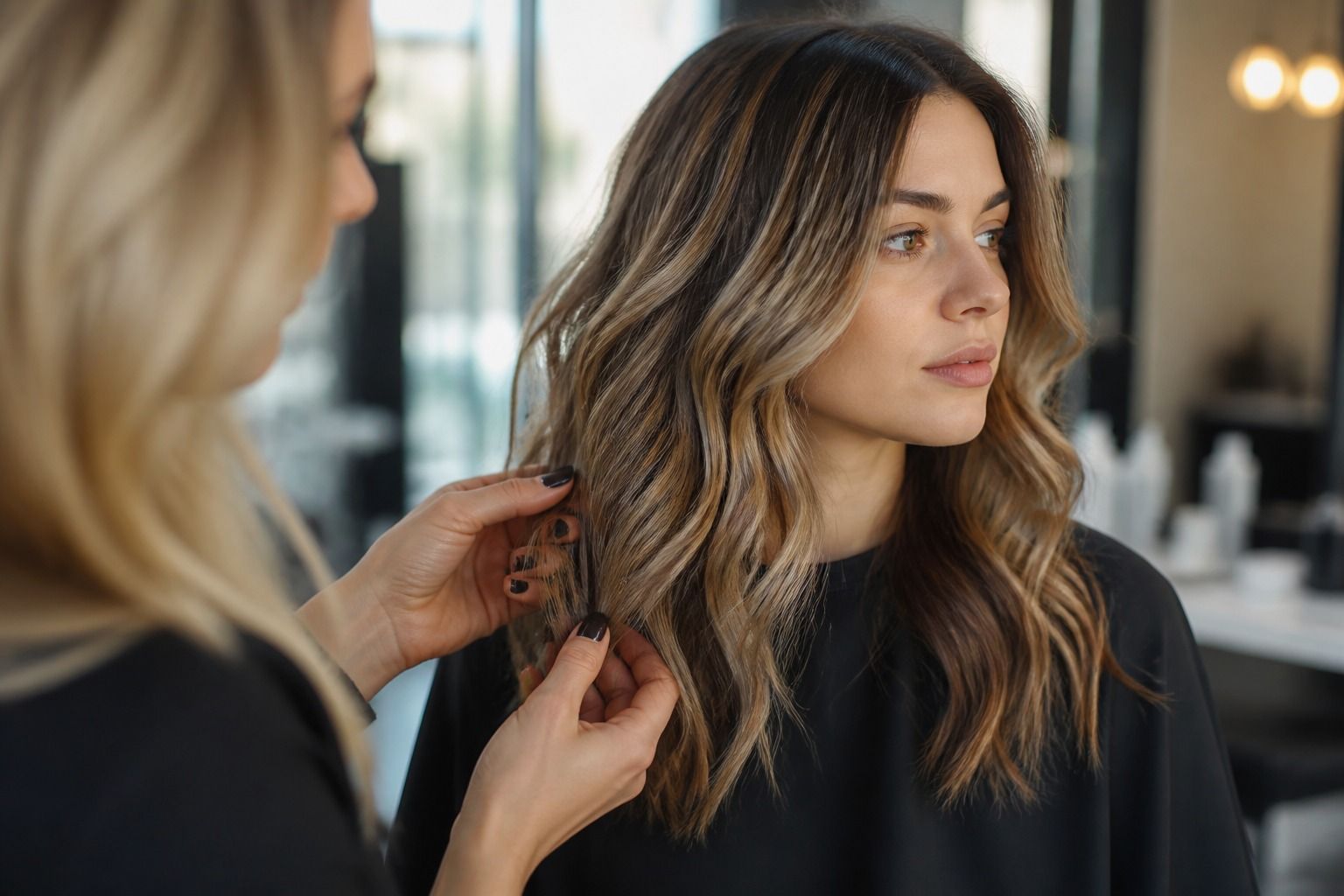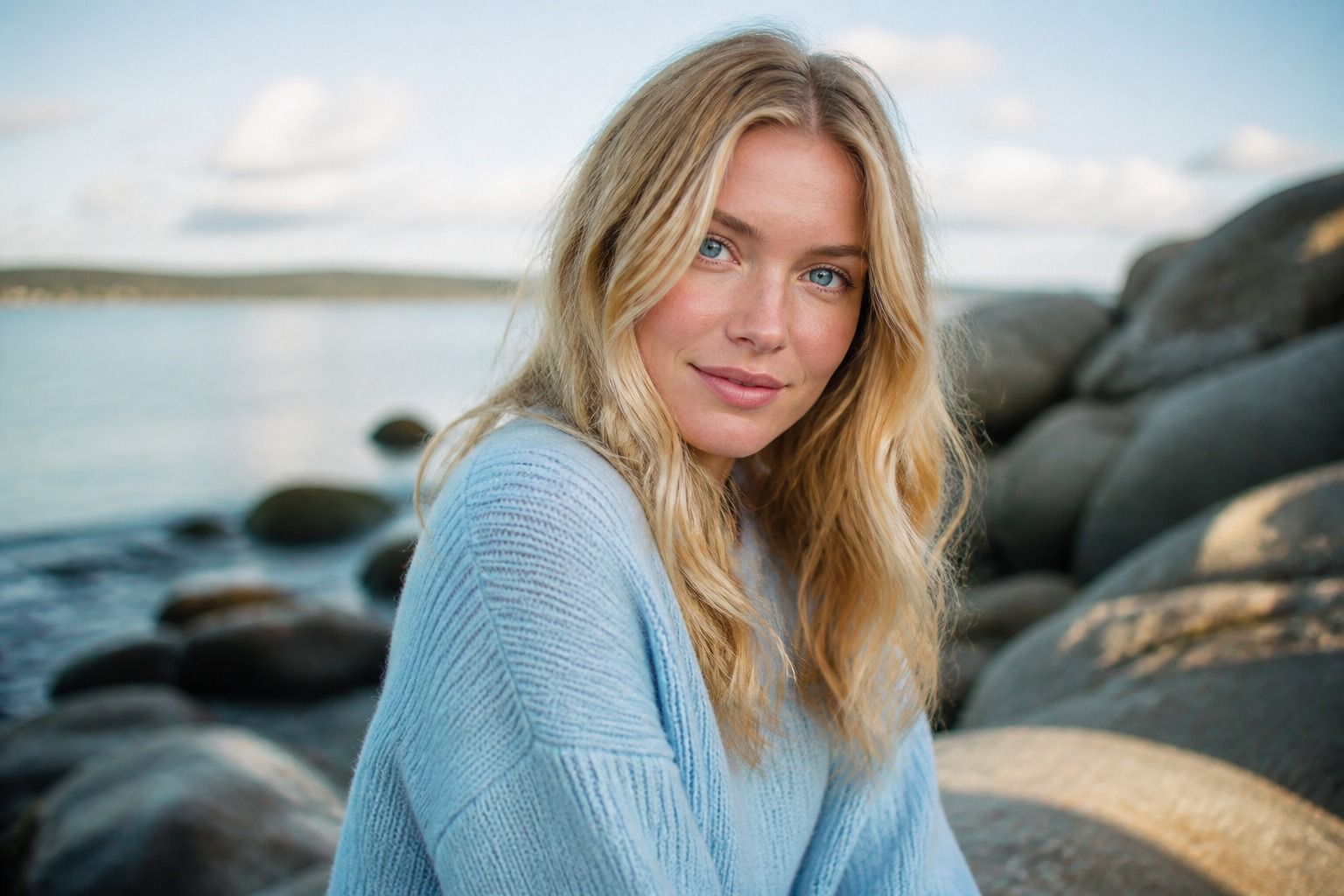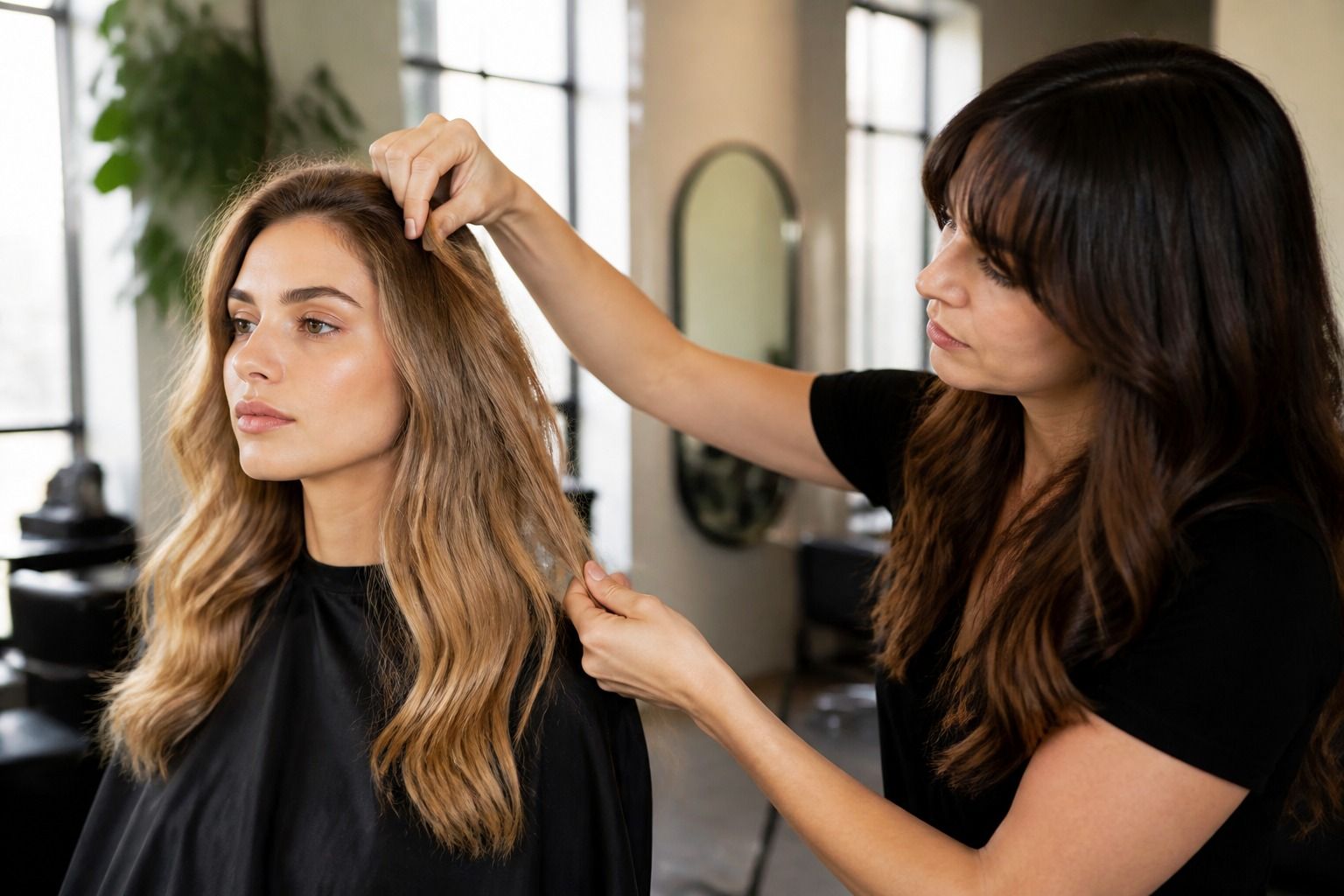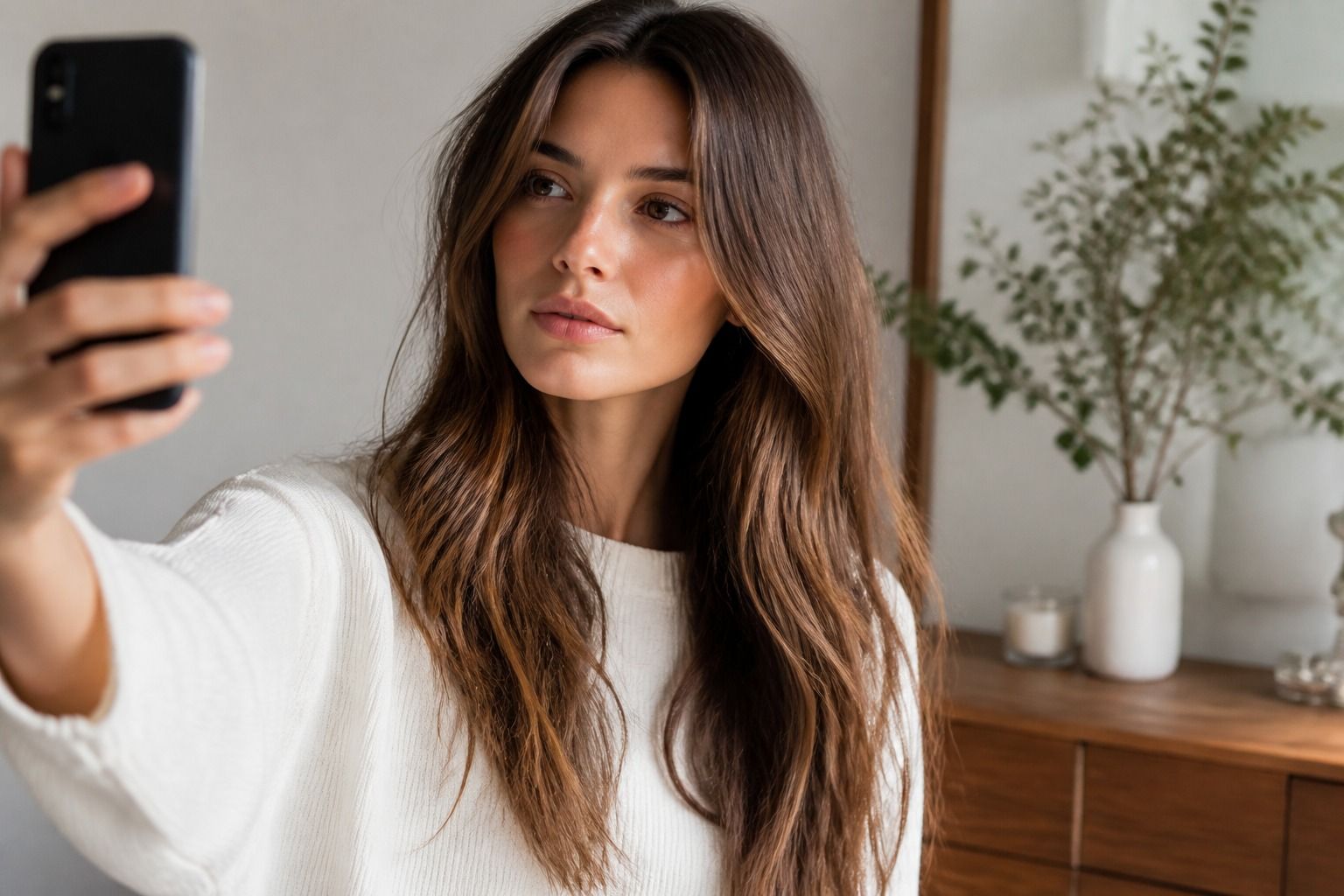
A free hair color analysis online can be a useful first conversation with yourself, especially when you know you want a change but cannot yet describe the change in salon language. It can point toward warmer or cooler hair, softer or clearer contrast, and a sensible range of depth. It cannot see every layer of old dye, predict how your hair will take color, or turn one phone photo into a guaranteed shade. The best result gives you a direction to test, not a verdict to obey.
How to prepare a useful photo
Start with the light before you worry about your pose. Stand near a large window during the day, with your face turned toward the light rather than placed directly in a bright strip of sun. A cloudy morning often gives a calmer reading than late afternoon light, which can add a yellow or orange cast to both skin and hair. Keep the room lights off if they make the photo look warmer than the room feels.
Use a plain background and leave your hair visible around the face. Pulling every strand back can hide the way your current color frames the skin, while a loose bun can make medium brown hair look darker than it is. If your hair has a fringe, layers, curls or a strong parting, take one photo with the hair in its usual shape and another with the front pieces gently moved aside. Texture changes how much light the eye sees.
Take the picture on the rear camera if that gives you a clearer image, but do not apply a beauty filter, portrait blur or automatic color effect. A phone may still adjust white balance, so a white wall or a sheet of plain paper in the frame can help you notice a strong color cast. The paper does not need to become a technical reference. It simply shows whether the camera has made the whole scene creamier, greener or bluer than it looked in person.
Keep makeup quiet for this particular check. A strong bronzer, bright lipstick or very cool eye makeup can pull attention toward a color that is not part of your natural contrast. Clean or lightly styled hair also helps, although a day-old texture is fine if that is how you normally wear it. Take note of the lighting and your current hair condition so you do not later compare a daylight photo with an indoor mirror and assume the shade changed overnight.
Which parts of an online result are worth keeping
Pay attention to direction rather than a single shade name. If the result repeatedly places you near soft neutral brown, ash beige or muted blonde, that pattern is more useful than a precise label that sounds like it belongs to a color chart. Shade names vary between salons and color lines. A phrase such as medium cool brown still needs to be translated into depth, brightness and the amount of visible warmth you can live with.
Undertone describes the color underneath the first impression. Two shades can have the same lightness and still behave differently beside the face. A beige blonde may look gentle in one head of hair and yellow on another. An ash brown can look balanced on warm-looking skin, then turn grey when the hair is very porous or the face already has low contrast. Read the result as a prompt to compare those small differences.
Contrast deserves equal attention. Someone with naturally dark brows, clear eyes and a dark root may look washed out in an all-over pale shade even if the undertone seems correct. Someone with soft brows and blended natural features may find a high-contrast black-and-blonde combination louder than expected. An online hair color analysis can suggest a family, but your face, brows, haircut and natural root decide how much contrast is comfortable.
| Part of the result | Useful question | What still needs a real check |
|---|---|---|
| Warm or cool direction | Does the suggested direction look calm beside your bare face in daylight? | Whether your existing color will reveal warmth or hold a cooler tone |
| Suggested depth | Would this lightness keep your eyes and brows visible? | How your texture and natural root will change the impression |
| Contrast level | Do softer transitions look more at home than sharp panels? | How highlights, a haircut and regrowth will divide the color |
| Shade family | Can you describe the family without relying on one brand name? | The salon wording, starting level and test strand result |
The recommendation becomes more useful when it gives you language for a consultation. “I want a muted medium brown with a neutral-cool finish and a soft root” tells a stylist more than “make me a Soft Summer brunette,” even if seasonal language helped you find the idea. Seasonal labels can be shorthand. They are poor substitutes for a starting shade and a maintenance plan.
Why dyed hair and indoor light confuse the answer
Digital tools mostly read the image they receive. They may mistake old blonde for natural lightness, a warm bathroom bulb for golden undertone, or a deep shadow under the hair for a darker base. Dark dyed hair can look almost black in a small selfie. Bleached lengths can look pale and even while the roots show a very different depth. The screen presents one surface, while your hair may contain several histories.
Existing dye matters because a preview cannot reliably show how a new shade will sit over every previous color. A cool filter over medium brown may resemble the result of a toner, but it does not explain what happens to faded mids, bright ends or a band near the root. The same recommendation can therefore need a small gloss on one head and a longer color correction plan on another. Keep the suggestion broad until a stylist sees the actual hair.
Indoor light makes comparison especially slippery. A warm ceiling light can make beige, honey and neutral brown blend together. A blue-white bathroom light can make ash look harsher and hide the warmth that appears by a window. When checking a preview, view the image in the same daylight each time. Screen brightness also changes your judgement, so use one device and avoid deciding from a heavily dimmed or oversaturated display.
Texture adds another layer. Straight, glossy hair reflects a clean band of color, while curls and waves break the light into smaller highlights. Fine hair may look brighter because more light reaches the surface. Dense or coarse hair can read deeper even when the underlying shade is similar. If your hair has strong waves, compare the preview with photos that show movement rather than expecting a flat digital block of color to imitate the finished result.
How to cross-check a recommended direction
Take the broad recommendation and test it against your current starting point. Write down your natural root, the most recently colored area, the lightest ends and any section that always fades faster. Add whether your hair is fine, dense, straight, wavy or curly. This short inventory prevents a promising shade from floating free of the hair you actually have.
Then make three quiet comparisons in daylight. Hold a neutral beige, a cooler grey-beige and a muted brown fabric near the face, or use simple color blocks on a screen without changing the camera setup. You are watching for the shade that lets your skin, eyes and hair sit together. If one color makes the face look tired while the hair looks impressive, it is probably a poor everyday direction even if the preview itself is attractive.
Look at the amount of change, too. A shift from medium brown to soft mushroom brown may need only a controlled tonal adjustment, while moving from dark dyed brown to a pale dusty blonde is a much larger project. A free result cannot measure the condition of your ends or the work needed to reach a lighter level. It can still help you choose whether to ask about a gloss, partial highlights, a root blend or a broader recolor.
| If the result suggests | Ask the salon about | Why the question matters |
|---|---|---|
| A cooler version of your current depth | A gloss or tonal refresh on the existing base | You may get the direction without changing the whole head |
| A lighter, muted blonde | Which areas need lightening and how the root will be handled | The ends and regrowth may need different plans |
| A softer brunette | Neutral brown, face-framing brightness and grow-out | Too much grey can close the face, while flat dark color can add weight |
| A visible warm shift | How much warmth should remain after the first wash | Warm reflection can look different under salon and home lighting |
A small test section is useful when the difference between two options is hard to imagine. It lets you see how your own hair reflects the tone, especially at the ends. The test does not remove every uncertainty, but it gives a better answer than enlarging a filtered selfie. Bring the online result as a conversation starter and show the part of your hair that most worries you.
When a free result is enough to plan a conversation
A free hair color analysis is enough when you need help choosing a direction, not when you need a finished formula. It can narrow “something lighter” into soft beige, muted ash, warm brown or a low-contrast highlight plan. It can also show that your first idea may be too sharp for the way you usually wear your hair. That kind of narrowing saves time and makes a salon appointment less vague.
It is particularly useful before a consultation if you bring the original photo, the result and two or three reference images taken in honest light. Mark what you like in each reference: the depth at the roots, the brightness around the face, the amount of warmth, or the way the ends blend. A reference that only looks good because of a filter will be easier to spot when you compare it with your own daylight photo.
Slow down when your hair has several layers of previous color, a very dark permanent base, fragile ends, a dramatic difference between roots and lengths, or a texture that the image does not show. Those details do not make the recommendation useless. They mean the next decision should be smaller and more specific. A gloss, a few face-framing pieces or a softer root can reveal whether the direction feels right before you commit to a larger change.
The sensible outcome is a short salon plan: your current base, the direction suggested by the online result, the level of contrast you want, and the maintenance you will actually accept. You might be happy to refresh a tone often, or you might want a shade that still looks deliberate as the root grows. Once those choices are clear, the free result has done its job. It has helped you ask a better hair question.