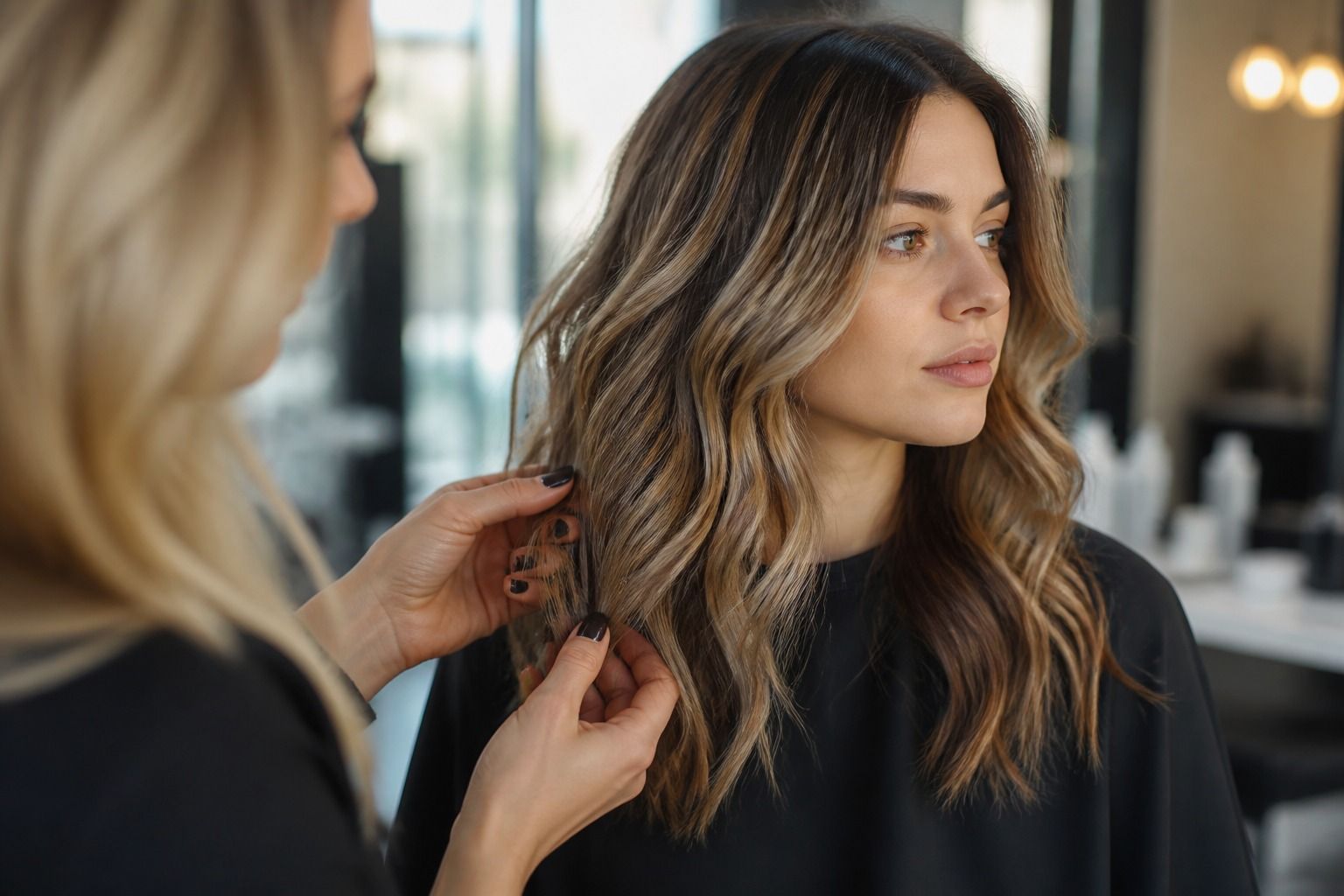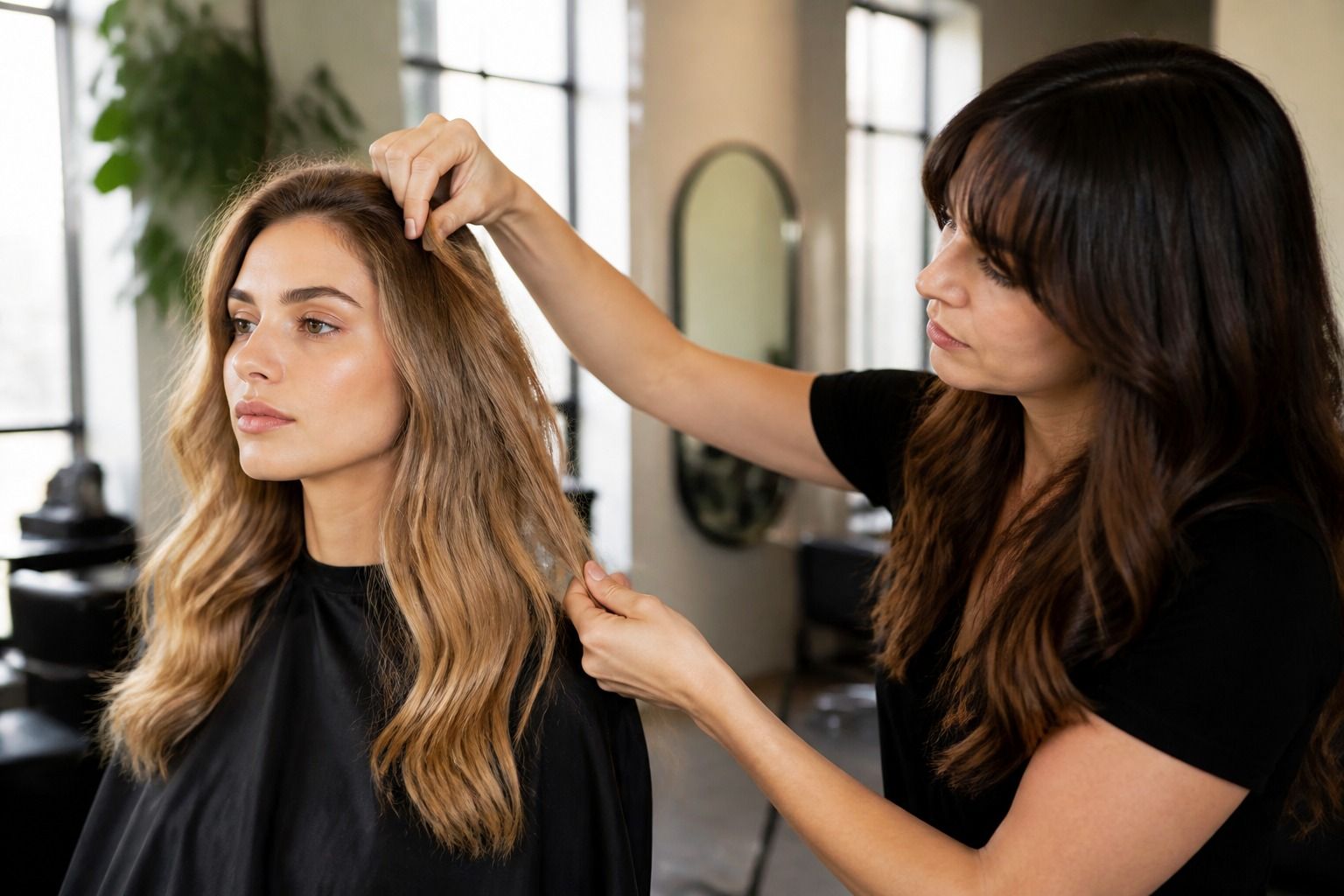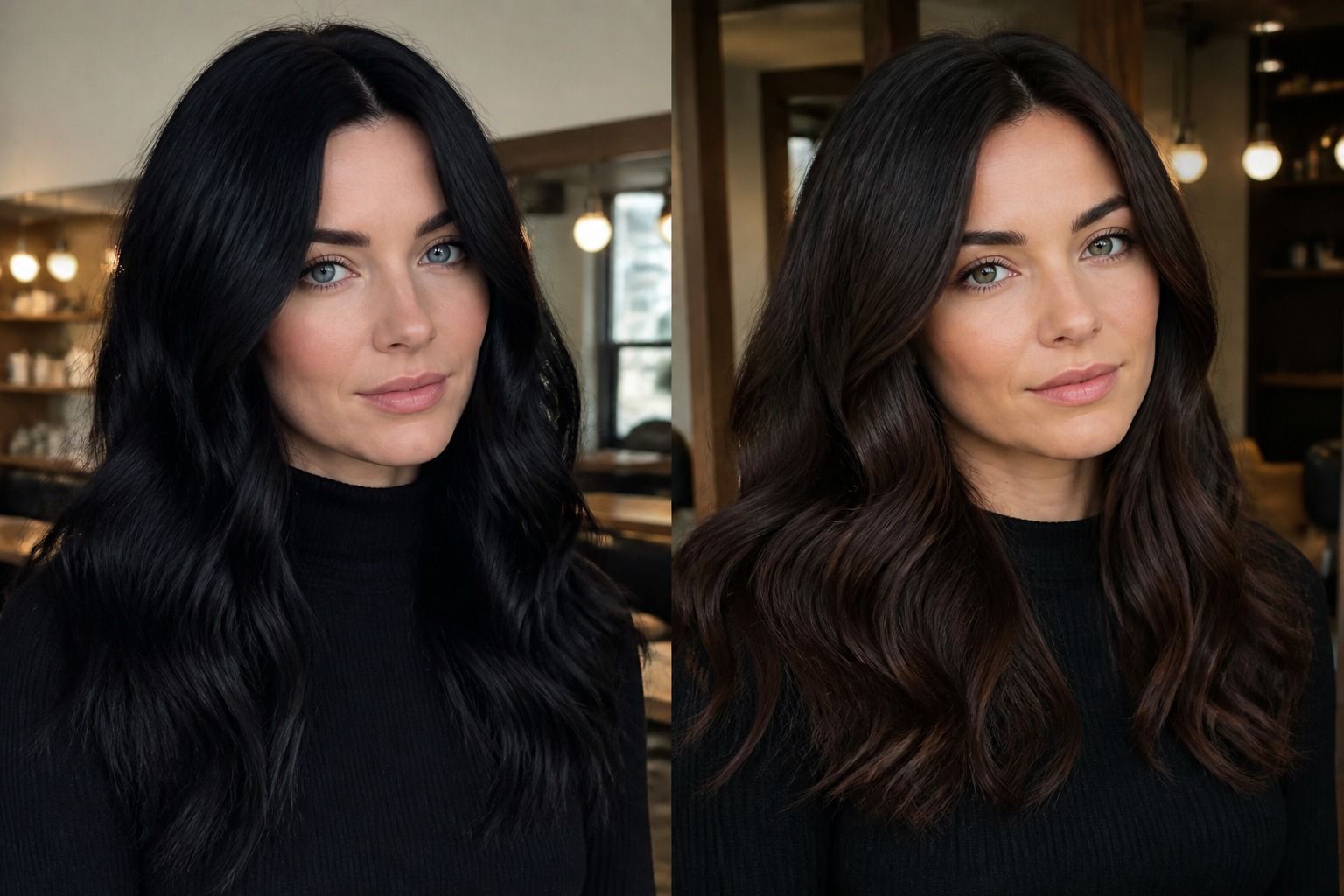
Cool Winter hair colours are often reduced to one dramatic answer: make the hair as dark as possible. That can work, but darkness is only one part of the effect. A shade can be deep and still look dull, too warm, too solid around the face, or awkward against a softer brow colour. The useful question is how much contrast your features already carry, and whether the proposed colour keeps that contrast clear. Blue-black, deep brunette and cool red can all work in different ways. The right choice depends on your starting shade, texture, lighting and willingness to maintain a distinct grow-out line.
What high contrast asks of a hair colour
High contrast means the difference between your lightest and deepest features is easy to see. Dark hair beside pale skin, bright eyes, a defined brow or a clear lip can create that effect, but it is not limited to one skin depth. Someone with medium skin and very dark brows may also read as high contrast. Look at your natural hair, brows and eyes together rather than deciding from a season label in isolation.
For a Cool Winter, colour usually needs two things at once: enough depth to hold its place beside the features, and enough clarity to avoid a dusty veil. A deep shade with a greyed, muddy surface may be technically cool but visually flat. A clean brunette with a cool reflection can feel more deliberate than an almost-black colour that hides every change in the hair.
Contrast also changes with styling. A sleek bob creates a single dark shape and makes depth more noticeable. Loose waves break the colour into smaller areas, so a very dark shade may look lighter at the edges. A blunt fringe, strong parting or face-framing layers can place the darkest colour close to the eyes. This is why the same formula can look balanced on long waves and severe on a short, graphic cut.
Before booking, take a daylight photograph with your hair down and your brows visible. Ignore the hair colour for a moment and notice the visual weight of the eyes, brows, lashes and natural roots. If the brows are medium and softly shaped, a black result may need a little movement around the face. If the brows and eyes are already crisp, a dark, clear colour can look far more natural than a softer beige-brown.
How to compare deep brunette, blue-black and cool red
These options do not create the same kind of contrast. Deep brunette gives depth with more visible tonal movement. Blue-black gives the sharpest edge and can make a haircut look polished, but it shows uneven fading and root growth quickly. Cool red keeps the intensity high while replacing the black-and-white effect with colour, which can be useful when a solid dark shade feels too severe.
| Colour direction | What it adds | What to check first |
|---|---|---|
| Deep brunette | Strong depth with a little softness and more room for natural-looking shine | Whether the brown stays clear rather than turning warm or smoky in indoor light |
| Blue-black | The cleanest, most graphic contrast and a very defined outline | How the shade will sit beside the brows, regrowth and any dry or porous ends |
| Cool red | High colour presence without relying only on extreme darkness | Whether you are comfortable with visible fading and regular tone refreshes |
Deep brunette is often the most forgiving starting point when natural hair is medium brown, dark blonde or previously lightened. It can be built with lowlights, a gloss or a carefully chosen permanent colour, depending on the starting shade and the salon plan. The practical advantage is not that it requires no maintenance. It is that a small change in depth can be adjusted more easily than a fully opaque blue-black result.
Blue-black deserves a proper strand and lighting discussion. In a salon, ask to see the darkest colour family in both daylight and the salon mirror. Blue reflection can appear elegant in cool light and almost ink-like under a phone flash. On very straight hair, the single dark surface may read as intentional and sleek. On porous curls or heavily layered hair, it can look uneven because the ends absorb and release colour differently.
Cool red covers a broad range, from a dark berry brunette to a deep red that catches light around the face. The key is the depth beneath the red. A red that is too light may reduce the contrast you wanted; one that is too purple can look disconnected from a warm wardrobe or a softer brow. Ask for a reference that shows the colour on hair with a similar starting shade, not just a studio image with perfect lighting.
Why clarity can matter more than extreme darkness
When someone says a Cool Winter colour looks wrong, the issue is often not that it is too light. It may be too muted, too golden or too blended. Clarity means the reflection is easy to read: a clean neutral brunette, a distinct blue-black or a cool red with a visible direction. It does not mean the colour has to look artificial or glossy in every photograph.
Starting shade matters here. Natural dark brown hair may only need a cooler surface tone and a small increase in depth. Medium brown hair may show orange or red warmth when lifted or coloured darker, so the salon needs to plan how that warmth will be controlled. Previously highlighted hair can take a cool shade quickly at the ends while the roots remain warmer. Treating the whole head as one blank canvas is what creates many patchy, over-dark results.
Texture changes clarity as well. Straight, compact hair reflects a large band of light, making a cool colour look cleaner and more graphic. Curly and coily hair scatter light across the bends, so the same shade can appear softer, with the deepest tone inside the curl. That is not a problem to correct. It is a reason to judge the colour in the texture you actually wear, including whether the hair is stretched, diffused or air-dried.
Lighting can make a good choice look contradictory. Warm bathroom bulbs bring out brown and red; north-facing daylight can make a colour look bluer; a phone camera may increase contrast around the hairline. Compare references in at least two settings. A shade that only works under a cool studio lamp is not a reliable salon reference. If you want a clear brunette, describe the unwanted reflection as carefully as the depth: no orange glow, no yellow haze, or no greyed finish on the ends.
How to balance brows and face-framing pieces
The face does not meet the hair as one flat block. Brows, lashes, sideburns and the first few centimetres around the forehead create a transition. Dark roots beside a pale face can look striking when the brows have similar visual weight. If the brows are much lighter, the hair may still suit you, but the contrast will be concentrated in one area and can feel more severe than expected.
You do not have to change your brows to wear dark hair. A better salon decision may be to keep the root deep and add a very small amount of movement near the face. For example, a deep brunette base with fine cool-brown pieces at the temples can preserve contrast while preventing a hard helmet effect. The pieces should be placed where they support the haircut, not scattered through the whole head simply to make the result look softer.
Face framing is especially important with a short cut, a strong fringe or a centre part. A clean, dark line around the face can look excellent when the cut has sharp geometry. On a loose, textured cut, a narrow transition may be more convincing than a blunt dark border. Ask the stylist whether the lightest pieces will be visible when the hair is tucked behind the ears, tied back and worn in its usual parting.
Consider your natural brow balance in the actual light where people see you. Indoor office light can make brows look softer than daylight. If the hair is blue-black but the brow is warm medium brown, a cool dark-brown brow pencil for occasional styling may be enough to connect the features, but it is optional. The colour should not force a permanent cosmetic routine that you will resent after two weeks.
When a softer transition is the smarter option
A high-contrast palette does not require a high-maintenance block of colour. A softer transition may be the better choice if you have a long grow-out tolerance, a busy schedule, fragile ends, a lot of grey, or a history of highlights. The aim is to keep the visual direction cool and clear while giving the root a little space to grow.
Ask whether the salon can keep your natural root visible, use a deeper root melt, or place the strongest depth through the mid-lengths rather than directly at the scalp. These choices are not interchangeable. A root melt can soften the grow-out line but may also make the first few weeks warmer. A darker mid-length can protect the appearance of the root while making the ends look heavier. The plan should match how often you are genuinely prepared to return.
Existing colour is the main edge case. Colour does not reliably lift previously coloured hair, so moving from a dark box colour to a lighter clear brunette or cool red is not a simple shade swap. A stylist may need to assess the colour history, porosity and uneven areas before suggesting a direction. Bring that history honestly, including old highlights and semi-permanent colours that have faded. It changes what is realistic in one appointment.
Grey hair, very light natural hair and very porous ends also need separate handling. Grey strands may take a dark colour differently from pigmented hair, while bleached ends can hold a cool tone more strongly and look darker than the roots. A practical consultation should cover the first result, the first fade and the next appointment. If the shade only looks right on day one, it is not a complete plan.
For the salon, bring one reference that shows the depth, one that shows the reflection and a note about maintenance. Say whether you want deep brunette, blue-black or cool red, then explain where you want the contrast: all over, mainly at the roots, or strongest around the face. That gives the stylist a decision to work with instead of a single dramatic photograph that may hide the starting shade and lighting conditions. Cool Winter hair colours look most convincing when the colour, cut, texture and grow-out plan support the same level of clarity.