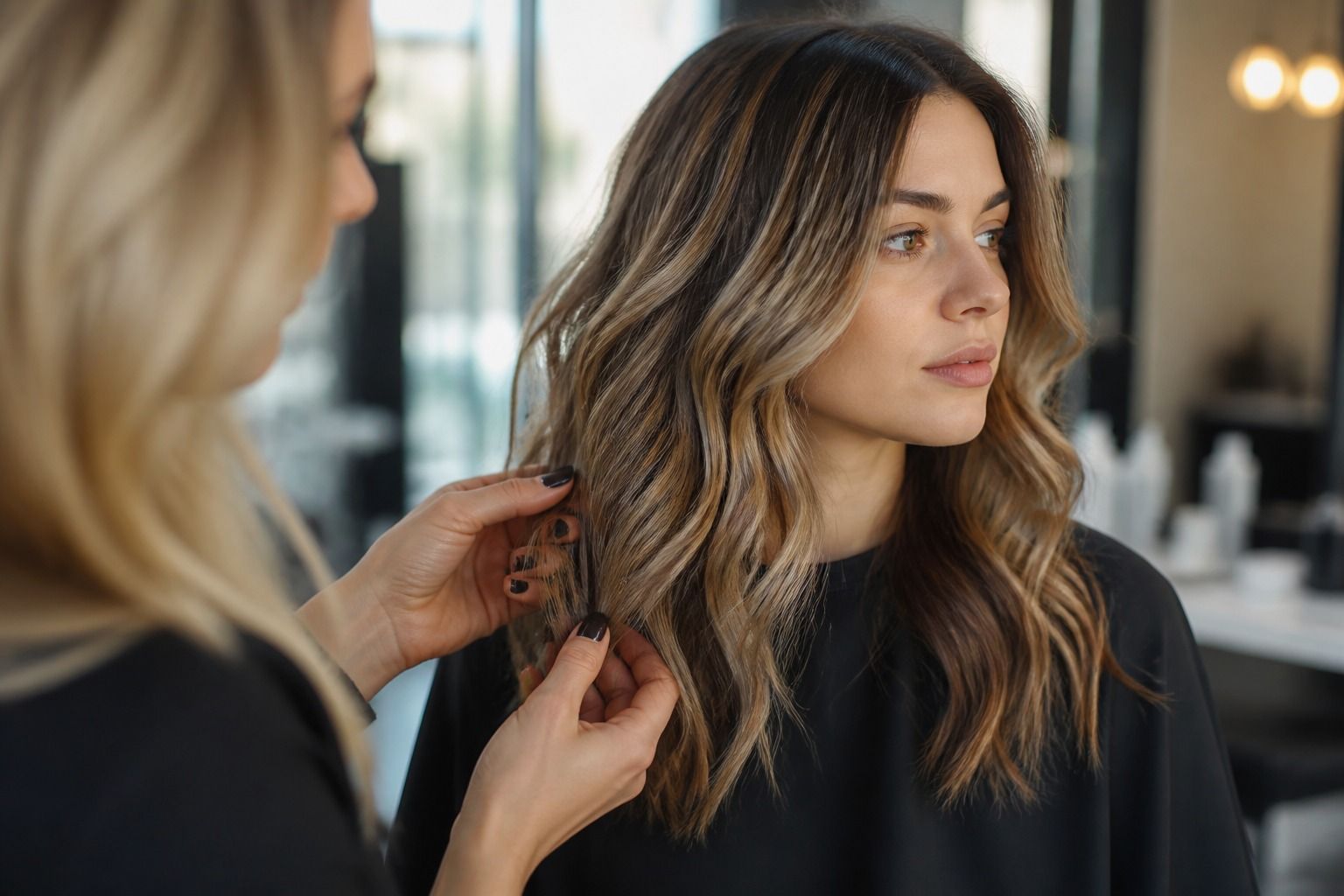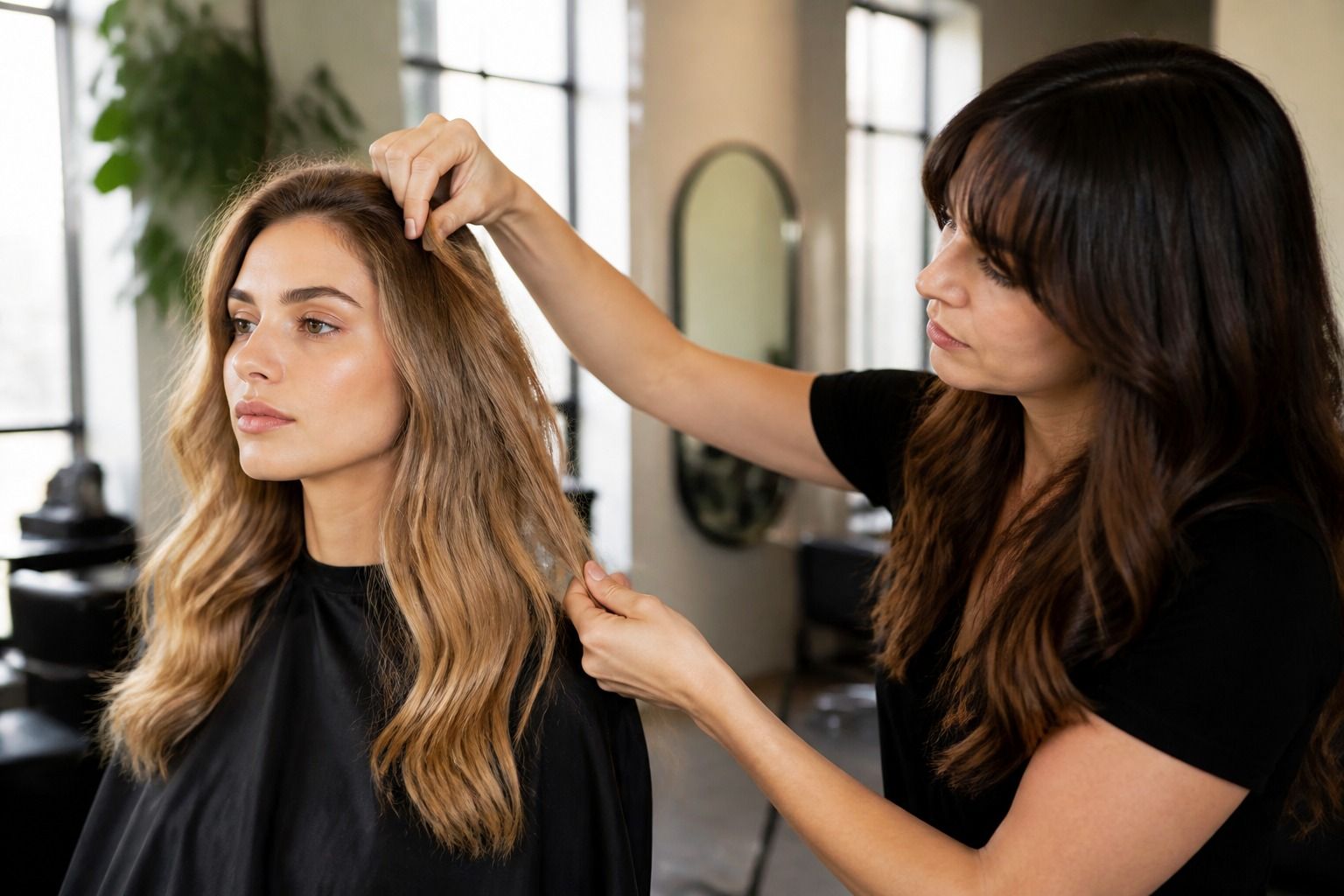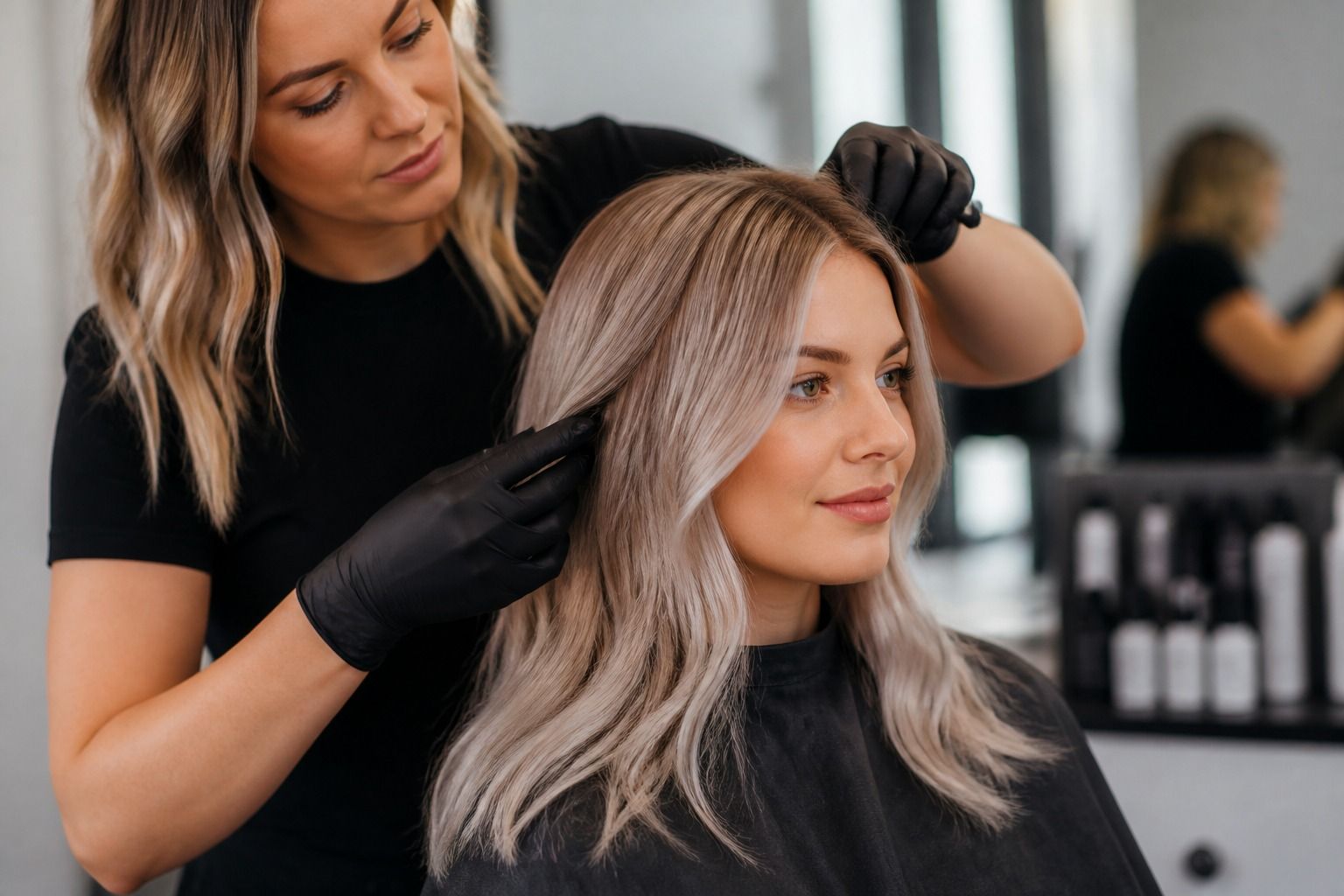
The most wearable Cool Summer hair colour is often the one that still looks deliberate a few weeks after the salon visit. A pale cool blonde, muted brunette or soft highlighted shade can be beautiful on day one and frustrating later if the root line is too strong, the toner fades quickly or the ends lose their balance. Choose the maintenance level first, then choose the colour that fits it.
Choose the maintenance level before the shade
Start with an honest picture of your calendar. If you are happy to book regular root work and occasional gloss appointments, you have more freedom with a high-lift blonde or a very precise cool tone. If salon visits are occasional, a rooted blonde, soft cool brown or low-contrast highlight pattern will usually be easier to live with. Neither choice is better. They simply place the work in different parts of the month.
Regrowth tolerance matters more than a colour label. A cool blonde that begins close to your natural dark blonde may grow out quietly, while a bright blonde against a medium brown root can show a line quickly. The same difference is visible with cool brunette shades when the new growth is warmer or lighter than the coloured lengths. Ask how the first centimetre of regrowth will look, not only how the full result will look in the chair.
High-lift blonde usually asks for the clearest schedule because the roots become visible as soon as they move away from the scalp. Highlights can soften that line by leaving some natural hair between the lighter pieces. A rooted finish can stretch the visual gap further, but it still needs a plan for the tone through the lengths. Maintenance is not one appointment type; it is the combination of root, brightness and tone.
| Colour choice | What changes first | Typical planning question | Who may prefer it |
|---|---|---|---|
| High-lift blonde | New growth creates contrast | How often can the roots be assessed? | Someone comfortable with a clear salon routine |
| Rooted blonde with fine highlights | Tone fades before the root feels urgent | Can a gloss restore the surface without adding more lightness? | Someone who wants brightness with a softer grow-out |
| Cool brunette | Warmth and dullness show through the lengths | Would a brunette refresh be enough next time? | Someone who wants lower contrast and a closer natural depth |
| Muted balayage | Ends lose shine or pieces become too warm | Do the existing lightened pieces still need to be touched? | Someone who wants change without a solid root line |
Use this comparison as a conversation starter, not a fixed timetable. Hair density, previous colour, porosity and the way you wear the hair can move the schedule in either direction.
Notice what fades first in cool blonde and brown hair
Cool colour does not disappear in one uniform way. On lightened hair, the first change may be a loss of the smoky or beige balance, leaving the blonde looking more yellow in sunlight. On cool brown hair, the issue may be less obvious: the lengths look a little warmer, the ends lose depth or the colour becomes flat after several washes. It helps to name the change rather than saying the colour has gone bad.
Look at the hair in natural daylight with the roots and ends side by side. If the root still looks right but the lengths feel warm, a full recolour may be unnecessary. If the lengths are fine but the front pieces are too bright, the next appointment may need a more targeted adjustment. If the colour is uneven from earlier lightening, a gloss can improve the impression but cannot erase every difference underneath.
A gloss appointment can be useful when you like the depth and placement but want the surface tone refreshed. It is a smaller decision than repeating a full lightening service. For a Cool Summer palette, the desired finish might be smoky beige, mushroom brown or a quiet cool brown rather than a strong grey cast. Tell the stylist what you want to keep as well as what has become too warm.
Colour fade also depends on how much lightening sits under the tone. A cool brunette placed over a stable natural base may change gradually. A cool brunette placed over old blonde ends can lose its darker appearance sooner and may show more variation from root to tip. That is not necessarily a failure. It is a reason to plan the refresh around the most porous or previously lightened areas.
Refresh the tone before recolouring everything
When the main shape still works, a refresh is often the sensible next move. A full recolour changes the entire head, even the parts that are behaving well. A targeted gloss or toner conversation can focus on faded lengths, a warmer face frame or ends that no longer match the root. This keeps the next service tied to the actual problem rather than repeating the first appointment by habit.
For blonde hair, decide whether you want less yellow, more beige, a slightly darker root or more visible brightness. Those are separate requests. Asking for all of them at once can lead to a result that is technically cool but visually heavy. If your hair already has enough lightness, the better move may be a tonal reset with no new highlights. If it lacks dimension, a few fine pieces may do more than a stronger toner.
For a brunette refresh, compare the root depth with the ends. If the roots are a good cool brown and the ends are faded, concentrate on the lengths. If the ends are darker and the roots look warm, the plan may need a different approach. Previously coloured hair does not always respond like untouched hair, so the stylist should know where old high-lift blonde, permanent colour or repeated glosses remain.
Watch the ends after each appointment. They often take in cool pigment more quickly because they are older or more porous. A colour that looks balanced at the crown may make the tips look smoky or dull. A useful salon instruction is to keep the ends soft and reflective rather than making them the darkest part of the head.
Do not use a fresh gloss to avoid every future decision. Eventually, the underlying placement or regrowth may need attention. The point of a refresh is to delay unnecessary work while the shape and depth are still serving you, not to keep layering colour over a problem that has moved from the root to the ends.
Make brassiness less obvious through daily choices
Brassiness is easier to judge when you separate it from shine, dryness and lighting. Warm indoor bulbs can make a neutral colour look golden. Very dry hair can reflect unevenly and seem more orange in some places. A phone camera can exaggerate warmth or flatten the difference between beige and ash. Check the hair near a window before booking a correction.
Wash frequency has a visible effect on a freshly toned result, but there is no single correct number of washes for everyone. Consider how quickly your scalp becomes uncomfortable, how often you exercise and whether the lengths become dry. The useful aim is consistency. A dramatic change from very frequent washing to long gaps can make the hair feel harder to manage than the colour is worth.
Choose a shampoo routine that does not leave you chasing the tone after every wash. Toning products can be part of a plan, but more is not automatically better. If a cool blonde starts looking lilac, grey or patchy, stop treating it as a simple brassiness problem and show the stylist what has happened. Porous ends may grab pigment differently from the healthier hair near the root.
Heat styling can also change how the colour reads. A smooth, polished surface reflects more light and may make a muted shade appear brighter. Repeated high heat can leave the ends rougher, which makes the colour look less even. Use the temperature and styling routine you can actually keep, and tell the colourist whether the hair is normally air-dried, waved or flat-ironed. The finished colour should make sense with your real texture.
Swimming, strong sun and hard water can all affect the way a cool hair colour looks, but the result varies from head to head. Treat them as possible contributors rather than assuming one cause. If the colour changes after a holiday, a season of outdoor work or a new washing routine, note the timing. That detail is more useful than buying another tone-correcting product at random.
Describe an achievable schedule to your stylist
Take a schedule to the consultation in practical language. You might say that you can manage a root-focused visit every several weeks, prefer a gloss between larger appointments and want the colour to remain acceptable if one booking moves by a fortnight. Or you may only want two substantial visits a year and are willing to trade some brightness for a softer grow-out. This gives the stylist a real boundary.
Many people can use a rough rhythm such as a main colour service followed by a shorter tone or gloss appointment, but the right spacing depends on how fast the roots show and how quickly the lengths change. A high-lift blonde may need attention before the tone feels old. A rooted highlight pattern may need a gloss first. A cool brunette may look fine at the roots while the ends ask for a refresh. Plan around the earliest visible problem.
Bring a photo of the colour after it has grown out, if you have one. Fresh salon images show the result at its most controlled. A picture taken three or four weeks later reveals whether the root, brightness and contrast are still comfortable. If you have never worn the shade, choose a reference with visible roots and ordinary daylight rather than one that hides the transition.
Keep a simple note after each visit: the starting shade, where the hair was lightened, which pieces were toned and what changed first. You do not need a formula or technical record to have useful information. The next consultation can then begin with an observation such as the face frame became warm first, the ends went flat before the roots needed work, or the cool brown stayed good except on old blonde sections.
Cool Summer hair colours become much easier to maintain when the colour, cut and appointment schedule agree with one another. A shade that needs constant correction is not automatically more flattering than one that grows out quietly. The best plan leaves enough coolness to suit your contrast, enough brightness to keep the face open and enough natural depth to make the weeks between appointments feel manageable.